
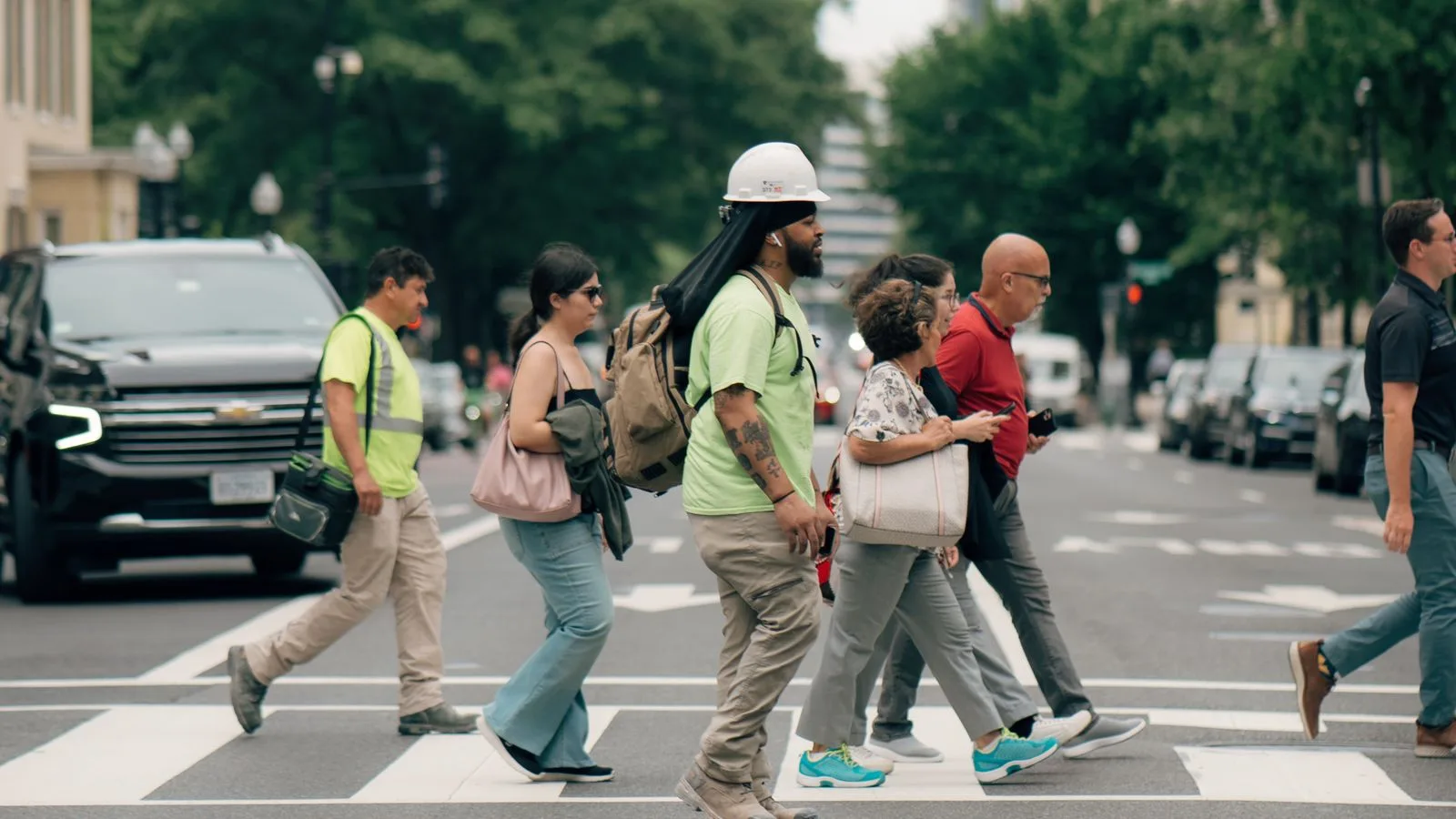
Buda · Pedestrian Accident
Buda Pedestrian Accident Lawyer
A pedestrian or bicycle accident claim in Buda arises when a motor vehicle strikes a person on foot or a cyclist on a Buda road or in a Buda parking area. Texas law treats cyclists as vehicle operators with full rights and duties under Tex. Transp. Code § 551.101, and drivers owe pedestrians the right of way in crosswalks and at controlled intersections under Chapter 552. Because a person on foot or a bike has no structural protection, even a low-speed strike on an FM-1626 school-zone approach or in the retail corridor near Cabela's typically produces serious orthopedic, head, and internal injuries. Modified comparative fault applies under Chapter 33 with a 51 percent bar, cases file in Hays County district court in San Marcos, and the two-year deadline of Tex. Civ. Prac. & Rem. Code § 16.003 governs.
Why Buda cases are different
Buda's pedestrian and cyclist risk concentrates where foot traffic meets fast vehicle movement: the at-grade FM-1626 intersections with their school-zone reductions and the high-turnover retail-corridor access roads near Cabela's, where drivers watching for parking entrances stop watching for people.
Right-of-way, crosswalks, and driver inattention at Buda intersections
Texas law gives pedestrians the right of way in marked crosswalks and at controlled intersections, and a driver always owes a duty to keep a proper lookout. In Buda, the recurring failure point is the inattentive driver: on the I-35 frontage and the retail access roads, motorists fixated on the Cabela's parking entrance or hunting for a turn miss a person in the crossing entirely, and on FM-1626 the school-zone reductions and at-grade signals create crossing points where a driver's failure to yield turns into a strike. We establish the right-of-way sequence from the responding agency's report, the signal phase, and any frontage-road or business surveillance, then apply Chapter 33 proportionate responsibility. Because a pedestrian usually bears little or no fault when crossing lawfully, the contested question is often only the driver's share, and keeping the injured person at or below the 51 percent bar is rarely difficult when the lookout failure is documented.
Severe injuries and the cross-county medical chronology
A person on foot or on a bike has no protection against a vehicle, so even a moderate-speed strike produces orthopedic fractures, head injuries, and internal trauma far out of proportion to vehicle damage. Buda's cross-county medical pattern complicates these cases in an unusual way. The nearest higher-level trauma facilities are north in Travis County, so EMS often diverts a seriously injured pedestrian to St. David's South Austin or Dell Seton in Austin rather than south to San Marcos, while every follow-up appointment may then be in Hays or south Travis. Insurers exploit that split to suggest gaps in care that never happened. We build the medical chronology cleanly across both county systems so the full arc of treatment reads as the continuous course it actually was, and so the severity of the injury is fully reflected in the demand.




Frequently asked
Buda pedestrian accident questions
- Not by itself. Drivers owe a duty to keep a proper lookout, and pedestrians have the right of way in marked crosswalks and at controlled intersections. Texas applies proportionate responsibility with a 51 percent bar, so even if you share some fault, you can recover as long as your share stays at or below half. We use the responding agency's report, the signal phase, and any frontage-road or retail-corridor video to establish what actually happened.
- Moderate injuries often go to Baylor Scott and White Medical Center in Buda on the I-35 frontage, but higher-acuity trauma is frequently diverted north to St. David's South Austin or Dell Seton in downtown Austin, because the closer higher-level facility is in Travis County. That cross-county pattern matters: your first ER record may be in one county and your follow-up care in another, and we document that chronology so it is not misread as a gap.
- Often yes. Near Cabela's and the surrounding Buda retail corridor, businesses run extensive exterior surveillance that can capture a strike a police report cannot, but retention windows are short, frequently seven to thirty days, so a preservation letter should go out in the first week. These cases can also raise premises-liability questions about the property owner's traffic and crosswalk management, which may add coverage beyond the driver's auto policy.
- Yes. Under Tex. Transp. Code § 551.101, a bicyclist operating on a road has the rights and duties of a motor-vehicle driver. That means a driver who fails to yield to a cyclist in a travel lane or cuts off a cyclist in a school zone on FM-1626 has violated the same duty of care as if they had cut off another car. The bicycle-as-vehicle rule supports the negligence claim and makes rider-fault arguments harder for the insurer.
- Drivers face heightened attention duties in school zones, and a violation of the reduced speed limit or the required stop for a crossing child is evidence of negligence. Texas also applies special rules to child claimants: very young children generally cannot be assigned comparative fault, and the two-year limitations deadline under Tex. Civ. Prac. & Rem. Code § 16.003 is tolled until the child turns 18. However, waiting that long means losing critical evidence, so it is best to investigate and document immediately.
- Potentially. If TxDOT, the City of Buda, or Hays County was responsible for maintaining a crosswalk, signal, or road condition that contributed to the strike, a governmental-liability claim may exist. The Texas Tort Claims Act governs those claims and imposes a pre-suit notice requirement, generally six months from the injury. Missing that deadline can bar the claim even though the standard two-year limitations period has not run.
Where we work from
Downtown Austin. Buda clients welcome.
Our office is in downtown Austin; we represent Buda-area clients statewide and travel to Buda for case-specific needs (scene visits, medical-records consultations, court appearances). Home and hospital visits when injuries make travel difficult.
Talk to a Buda pedestrian accident lawyer.
Free case review, no obligation. We'll tell you straight whether we can help.