
Conroe · Truck Accident
Conroe Truck Accident Lawyer
A commercial truck accident claim in Conroe involves not just the driver's negligence but the motor carrier's obligations under the Federal Motor Carrier Safety Regulations; hours-of-service records, driver qualification files, ELD logs, and post-crash drug testing are all part of the liability picture. I-45 between the Grand Parkway and Loop 336 is the primary Conroe truck corridor, carrying Houston-to-Dallas freight past exits at FM-1488, FM-3083, and SH-105. Texas law provides two years to file under Tex. Civ. Prac. & Rem. Code § 16.003, but electronic carrier records overwrite far sooner, making early preservation letters critical. These cases file in Montgomery County's civil district courts at the Lee G. Alworth Building, though out-of-state carriers frequently trigger federal removal to the Southern District in Houston.
Why Conroe cases are different
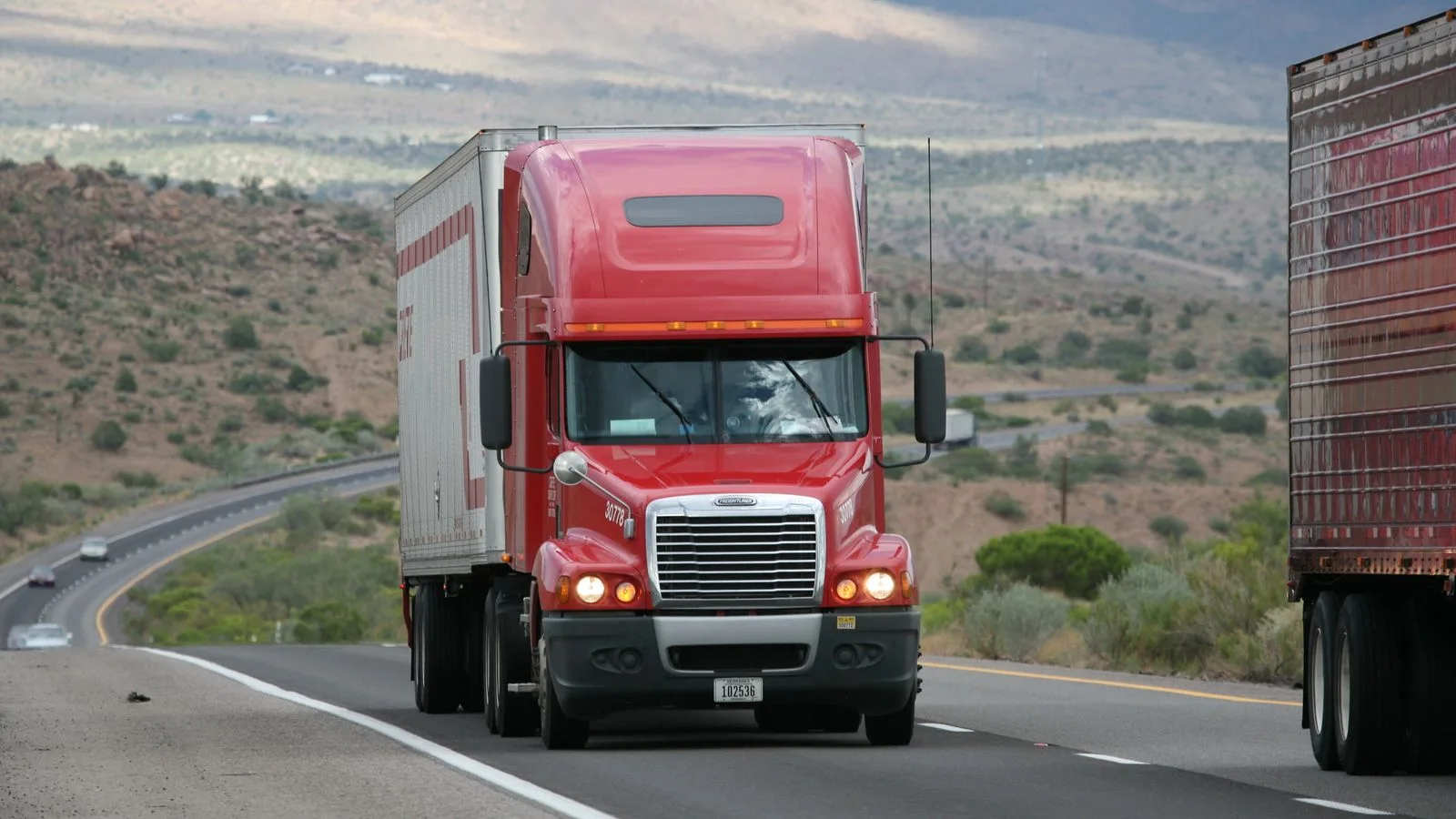
I-45 north of the Grand Parkway carries a constant stream of 18-wheelers running freight between Houston and Dallas, and commercial-vehicle files are a meaningful share of Conroe intake, cases built very differently from a passenger-car claim and governed by federal carrier rules.
FMCSA, ELD logs, and the data race after an I-45 truck crash
A collision with a tractor-trailer on I-45 between the Grand Parkway and Loop 336, or at the high-speed exits onto FM-1488, FM-3083, and SH-105, is built around federal evidence rather than the crash scene alone. Carriers operating commercial vehicles are governed by the Federal Motor Carrier Safety Regulations, which require electronic logging devices, hours-of-service limits, driver-qualification files, and post-crash drug-and-alcohol screening. Much of that evidence is electronic and overwrites on retention schedules, so preservation and spoliation letters need to reach the carrier — and, where a freight run is involved, the shipper — at intake. The truck's ELD data, the driver-qualification file, dispatch records, and EDR download all enter discovery. The point is to lock the carrier's own records before they cycle out, because a fatigued-driver or hours-of-service violation often does more to establish liability than the physical evidence at the scene.
Employer liability, commercial limits, and federal removal to Houston
When the at-fault vehicle is a commercial truck on a work run, the coverage picture is materially larger than a personal auto policy. The carrier's commercial auto policy is typically far larger than personal coverage and frequently sits beneath an umbrella layer, and where a shipping contract contains indemnity terms, the shipper's coverage can be reached as well. The employer-of-record question is central: whose name is on the truck, who issued the dispatch, and who paid the driver all feed the vicarious-liability analysis, which matters because the right defendant determines the available limits. Even a company-titled SUV driven by a sales representative on business, not just an 18-wheeler, opens the employer's commercial and umbrella coverage rather than capping the claim at the driver's personal policy. Because many Conroe commercial defendants are out-of-state corporations, diversity removal from Montgomery County to the Southern District of Texas at the Bob Casey courthouse in Houston is a real prospect we evaluate before filing.





Frequently asked
Conroe truck accident questions
- Electronic records. ELD hours-of-service logs, EDR data, dispatch records, and post-crash drug-and-alcohol screening all sit on carrier retention schedules and can be overwritten. That is why preservation and spoliation letters to the carrier — and to the shipper when a freight run is involved — go out at intake, before the data cycles out and the carrier's own records become unavailable for the I-45 corridor crashes that make up much of Conroe truck intake.
- Usually the carrier's commercial auto policy responds, and those policies are typically far larger than personal coverage and often sit beneath an umbrella layer. Depending on the shipping contract's indemnity terms, the shipper's coverage may also be reachable. The employer-of-record question — whose name is on the truck, who issued the dispatch, who paid the driver — drives the vicarious-liability analysis, because the right defendant determines the available limits.
- Many Conroe commercial defendants are out-of-state corporations because of the heavy I-45 Houston-to-Dallas freight footprint. When the parties are from different states and the amount in controversy is high enough, the defense can remove the case from Montgomery County state court to the Southern District of Texas at the Bob Casey courthouse in Houston. Removal changes the procedural rules and jury pool, so the venue analysis is part of early case strategy.
- Less than the carrier claims. Under 49 C.F.R. § 376.12, when a motor carrier operates under its own operating authority, the carrier remains liable even when the driver holds an independent-contractor label. The carrier cannot use a contractual characterization to escape responsibility for a driver running under its authority and DOT number. We trace who controlled the truck's operation, not just what the contract says.
- Two years from the date of injury under Tex. Civ. Prac. & Rem. Code § 16.003. That deadline is the same as for car crashes, but the practical urgency is higher for truck cases because electronic carrier records overwrite in weeks, not years. Preservation letters for ELD data, the driver qualification file, and the ECM download need to go out at intake, not near the two-year mark. If a government entity or Conroe ISD vehicle is involved, Tort Claims Act notice runs on a much shorter clock.
- Rural FM roads west of Conroe have limited surveillance coverage, so the case relies on physical evidence: vehicle damage and EDR downloads from both vehicles, DPS crash report documentation, and the truck's own ELD and ECM data. The carrier's electronic records often tell the story that no witness can: speed at impact, braking behavior, and hours of continuous operation before the crash. Preserving those records immediately is what keeps the rural case provable.
Where we work from
Downtown Austin. Conroe clients welcome.
Our office is in downtown Austin; we represent Conroe-area clients statewide and travel to Conroe for case-specific needs (scene visits, medical-records consultations, court appearances). Home and hospital visits when injuries make travel difficult.
Talk to a Conroe truck accident lawyer.
Free case review, no obligation. We'll tell you straight whether we can help.