
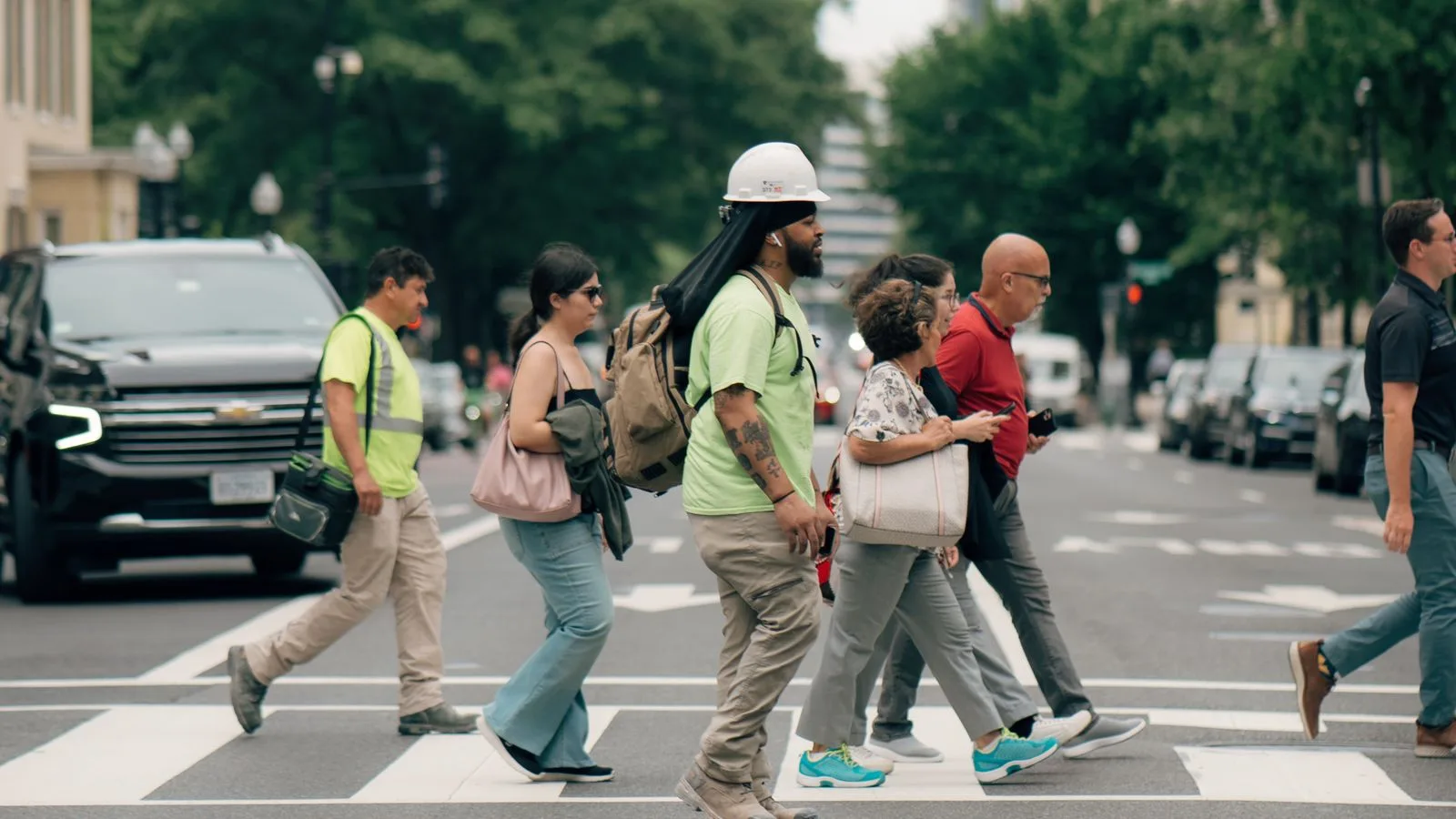
El Paso · Pedestrian Accident
El Paso Pedestrian Accident Lawyer
A pedestrian or bicycle crash case in El Paso arises when a motor vehicle strikes a person on foot or on a bicycle, triggering the driver's duty to yield under Tex. Transp. Code Ch. 552 and the cyclist's equal rights as a vehicle user under § 551.101. El Paso's downtown grid and the Mesa Street arterials near UTEP concentrate these incidents where commuter traffic and high foot traffic converge, and the injuries are severe because nothing protects an unenclosed person from a multi-thousand-pound vehicle. Texas modified comparative fault applies: a victim can recover as long as they are not more than 50 percent at fault; and the two-year statute under Tex. Civ. Prac. & Rem. Code § 16.003 controls.
Why El Paso cases are different
El Paso's pedestrian and cyclist incidents concentrate on the downtown and Mesa Street arterials, particularly around the UTEP campus, where dense foot traffic meets fast commuter flow. When a driver fails to yield, the person on foot or on a bike absorbs the full force.
Crosswalks, right-of-way, and the Mesa Street corridor
The downtown grid and the Mesa Street arterials near UTEP mix high pedestrian and cyclist volume with steady commuter traffic, and that's where El Paso's foot-traffic injuries cluster. Texas law gives pedestrians the right of way in marked crosswalks and at controlled intersections, and drivers owe a duty to yield, watch for people crossing, and slow near campus and downtown zones. Most of these crashes come down to driver inattention: a turn taken without checking the crosswalk, a failure to stop, a phone in hand. We reconstruct right-of-way from signal timing, the point of impact, and any traffic or business surveillance footage in the area, which around a busy arterial is often available if preserved quickly. The legal question is rarely whether the driver should have seen the person; it's proving the driver had the chance and didn't take it.
Severe injuries and the comparative-fault fight
A pedestrian or cyclist struck by a vehicle has no crumple zone, so even a moderate-speed impact in the downtown or Mesa Street corridors can produce fractures, head injuries, or worse. Those injuries drive higher medical exposure, which is exactly why insurers lean hard on Texas comparative fault, arguing the person crossed outside a crosswalk, against a signal, or wore dark clothing to shift blame and trigger the 51-percent bar. We answer those arguments with the physical evidence rather than conceding them. The medical chronology matters enormously here: serious El Paso crash injuries route to University Medical Center, the region's Level I trauma center, and we pull complete records from every treating facility to document the full injury picture and tie it to the impact.
More in El Paso
Other ways we help El Paso injury victims.




Frequently asked
El Paso pedestrian accident questions
- Possibly yes. Crossing outside a crosswalk may add some comparative fault under Texas law, but it doesn't automatically end your claim; drivers still owe a duty to keep a proper lookout and avoid hitting people in the road. As long as you're not found more than 50 percent at fault, you can still recover, reduced by your share. The facts of speed and visibility matter.
- There often is. Busy El Paso arterials and the area around UTEP have traffic signals, transit, and business surveillance that may have captured the collision. That footage typically overwrites on a short cycle, so it has to be identified and preserved quickly. We send preservation letters early to keep that evidence from being lost before anyone can use it.
- The most serious injuries route to University Medical Center of El Paso, the region's Level I trauma center. Las Palmas, Del Sol, and the Hospitals of Providence network handle much of the remaining major and moderate intake. Because El Paso has Level I capacity locally, your treatment usually stays in the metro, and we gather records from each facility involved.
- A commercial vehicle opens a respondeat superior claim against the employer in addition to the driver. If the driver was acting within the scope of their employment — making a delivery, driving a company vehicle — the company's commercial auto policy is the real coverage target. We identify the employer and the applicable policy at intake and add the business as a defendant when the evidence supports it.
- Yes. Texas UM/UIM coverage and personal injury protection on your own auto policy extend to you as a pedestrian or cyclist injured by a vehicle. If the driver who hit you is uninsured or underinsured, your own policy may be the primary source of recovery. PIP coverage pays regardless of fault. We check every available policy layer before settling on a claim strategy.
- Potentially, but governmental liability in Texas is narrowly defined by the Texas Tort Claims Act. A government entity can be liable for a dangerous condition of real property, including a malfunctioning traffic signal, only if the city had actual notice and failed to act. Claims against the city also require pre-suit written notice within six months of the incident; missing that deadline bars the claim entirely.
Where we work from
Downtown Austin. El Paso clients welcome.
Our office is in downtown Austin; we represent El Paso-area clients statewide and travel to El Paso for case-specific needs (scene visits, medical-records consultations, court appearances). Home and hospital visits when injuries make travel difficult.
Talk to a El Paso pedestrian accident lawyer.
Free case review, no obligation. We'll tell you straight whether we can help.