
Car accidents · Subcategory
T-Bone Accident Lawyer in Texas
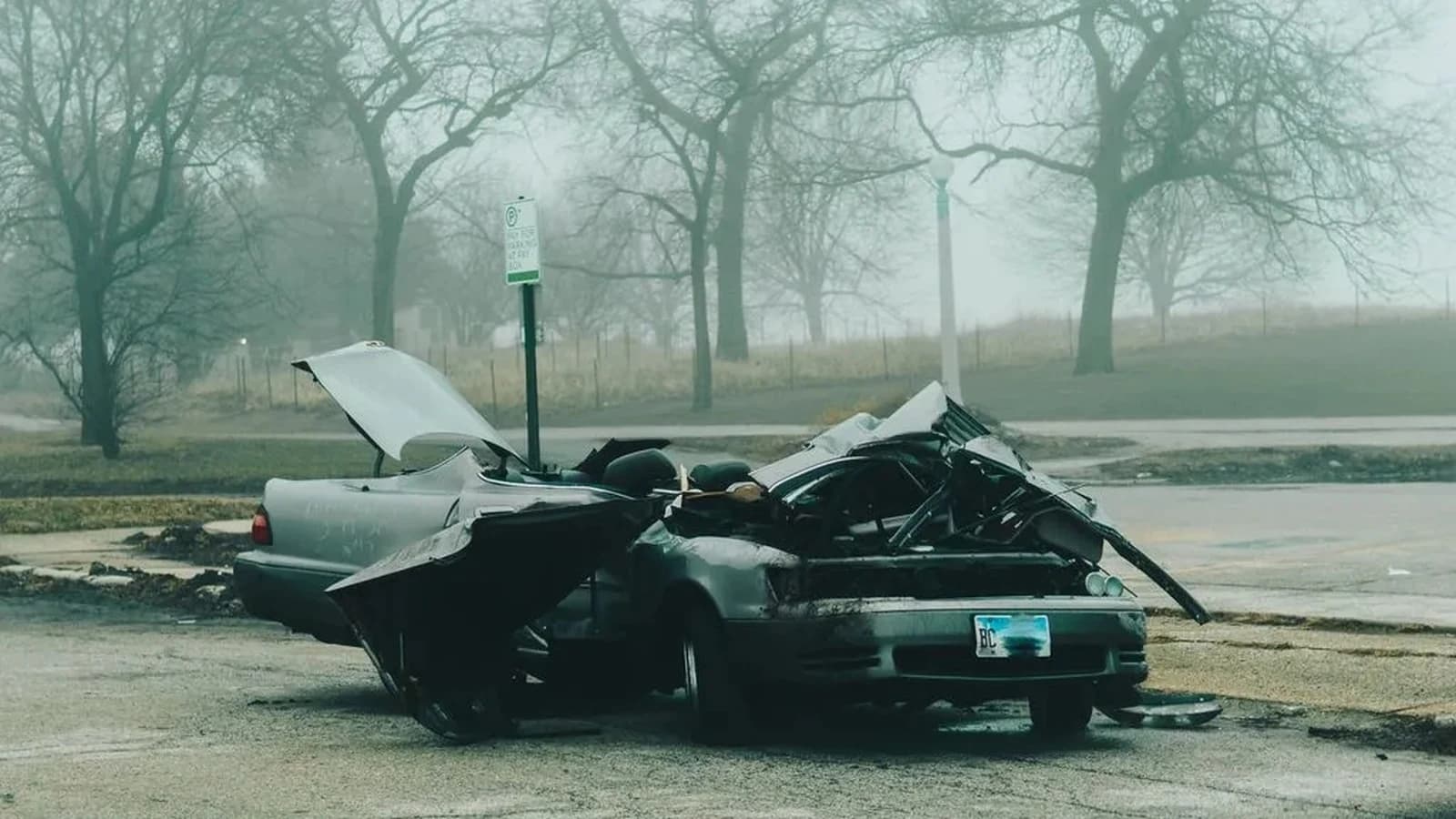
A T-bone, sometimes called a broadside or right-angle crash, is a side-impact collision where the front of one vehicle strikes the side of another. It is the most physically dangerous common-impact geometry on Texas roads because passenger vehicles have far less structural protection on the side than the front or rear. A T-bone at 35 mph routinely produces injuries that a 35-mph rear-end impact would not.
Why side impacts produce categorically worse injuries
Modern vehicles dissipate front and rear forces through crumple zones, hoods, trunks, and engine bays. The side of a vehicle has only the door, the B-pillar, and a few inches of trim and steel between the impacting bumper and the occupant's torso, pelvis, and head. Even with side-curtain and side-torso airbags, which deploy fast but offer milliseconds of cushion, the injury patterns we see in T-bone files include pelvic ring fractures, rib fractures with pulmonary contusion, splenic and renal injury on the struck side, and TBI from head-to-pillar contact. A near-side occupant (the side that was struck) tends to fare worse than a far-side occupant in the same crash.
Liability usually shifts on right-of-way evidence
Most T-bones happen at intersections where one driver violated a stop sign, ran a red, or turned across oncoming traffic. The legal question collapses to right-of-way under Tex. Transp. Code §§ 544.007, 545.151, and 545.152. The evidence question is usually whose light was green, whose stop was complete, and whether anyone had a protected arrow. Signal-controller logs from the municipality (where available), business camera footage, and independent witnesses do most of the work. We have seen liability flip in serious cases when a nearby business camera caught a red-light run that the crash report did not capture.
Children, child-seat injuries, and rear-seat occupants
Children in properly installed rear-facing or forward-facing seats survive T-bones at rates that adults in the same crash sometimes do not, but the side-impact forces on a child seat can still cause concussion, clavicle fracture, and seatbelt-syndrome injuries to the abdomen. We document child-seat installation and post-crash inspection on every file involving a pediatric occupant, because seat manufacturers recommend replacement after any moderate or severe crash and that replacement cost (plus any pediatric trauma workup) is a recoverable component. In rear-seat-occupant injury cases, we also evaluate the side-airbag deployment data; the absence of deployment on a near-side rear curtain is sometimes diagnostic of either a vehicle defect claim or a marginal-threshold impact.
Coverage realities in a serious T-bone
Side-impact injury severity routinely exceeds the at-fault driver's basic Texas policy. We work through every layer: the at-fault primary policy, any umbrella, any household resident policy, the employer commercial policy if the other driver was working, and the client's UM/UIM stack. In files involving a hospital admission, an ICU stay, or surgery, the $30,000 personal minimum is often consumed by the first 48 hours of treatment, and the case becomes a coverage-hunt rather than a liability fight. Identifying coverage early, before signing any release with the primary carrier, is critical, because some carriers will try to close their layer in a way that interferes with stacking.



Frequently asked
Questions Texas accident victims ask us
- Because the side of a vehicle has almost no crumple structure. Front and rear impacts have engine bays, trunks, and bumpers absorbing energy before it reaches the occupant. A side impact transfers most of the force directly through the door and B-pillar into the occupant's torso, pelvis, and head within a fraction of a second. Side-curtain and side-torso airbags help, but the protective margin is much smaller than in front or rear impacts.
- Through a combination of signal-controller logs (where the city retains them), business surveillance footage from corner stores and gas stations, independent witnesses, and physical evidence from the crash itself. We start with the preservation step; most cities overwrite traffic-signal logs and most businesses overwrite camera footage on rolling 30-day cycles. Once the evidence is locked down, a contested-light T-bone usually resolves on the documentary record rather than driver testimony.
- Two practical points. First, get the child medically evaluated even if they seem fine; pediatric concussion and abdominal seatbelt injury can present hours or days later. Second, the child seat itself should be inspected and almost always replaced. Manufacturers (and NHTSA) recommend replacement after any moderate or severe crash because crush damage to the seat structure may not be visible. The replacement cost and any pediatric workup are recoverable case expenses.
- Sometimes nothing, sometimes a lot. Side airbags deploy based on lateral acceleration thresholds and the precise geometry of the impact. Oblique angles, low-speed impacts, and certain non-deformation conditions can leave them unfired even when occupant injury is serious. If the impact severity should have triggered deployment and didn't, we look at the airbag control module data and consult with a restraint-system engineer; a non-deployment in a deployment-threshold crash is occasionally a product-liability question.
- Usually yes, but the defense will look for any contributing-fault argument: that you entered the intersection late on your own green, that you should have seen the approaching driver and avoided the collision, that you were distracted or speeding. None of these arguments succeeds on their own when the other driver violated a clear right-of-way duty. Texas's modified comparative-fault rule means we still litigate fault percentages, but at-fault drivers running reds rarely escape primary liability.
- Near-side occupant injuries: pelvic fractures, rib fractures and pulmonary contusion, shoulder injuries from the seatbelt and door, head injuries from contact with the B-pillar or window, and abdominal organ injury (spleen, kidney, liver). Far-side occupants tend to have whiplash, contralateral shoulder injury from the belt loading, and head injuries from being thrown across the cabin. Both sides see TBI more often than people realize because closed-head injuries do not require visible head impact.
- Each injured occupant has their own personal-injury claim. Passengers are almost never assigned fault and have a clean claim against whoever caused the crash, sometimes including their own driver if they share fault. The same insurance policies that apply to your claim also apply to your passengers', and the per-person versus per-accident limits become important when multiple occupants are seriously injured.
- Twelve to twenty-four months is typical for files involving surgery, hospital admission, or pediatric injury. The medical picture has to stabilize — orthopedic fractures need to heal or fail, post-concussive symptoms need to resolve or become chronic — before the demand package can be built. Side-impact cases with multiple injured occupants and multiple coverage layers can run longer because each layer's negotiation runs on its own track.
Let's talk about your case.
Free case review, no obligation. We'll tell you straight whether we can help.