
Austin · Pedestrian Accident
Austin Pedestrian Accident Lawyer
A pedestrian or bicycle accident claim in Austin involves a motor vehicle striking an unprotected person on foot or on a bicycle, governed by Texas driver-duty statutes (Tex. Transp. Code Ch. 552 for pedestrians; § 551.101 for cyclists) and the same two-year limitations period and 51%-bar comparative-fault rule that applies across Texas. Downtown Austin — Congress Avenue, Cesar Chavez, 6th Street, and the South Congress corridor — concentrates these incidents, and event-traffic spikes during SXSW and ACL weekends create predictable surges. Cases are filed in Travis County district court, and the injuries, which arrive at Dell Seton Medical Center at UT, are frequently more severe than the initial ER record reflects.
Why Austin cases are different
Downtown Austin concentrates pedestrian and cyclist incidents — Congress Avenue, 6th Street, Cesar Chavez, and the South Congress corridor — and they spike during evening dinner hours and event nights. A walker or rider with the right-of-way still has to overcome an inattentive driver and a short evidence window.
Right-of-way, driver inattention, and the downtown crosswalk
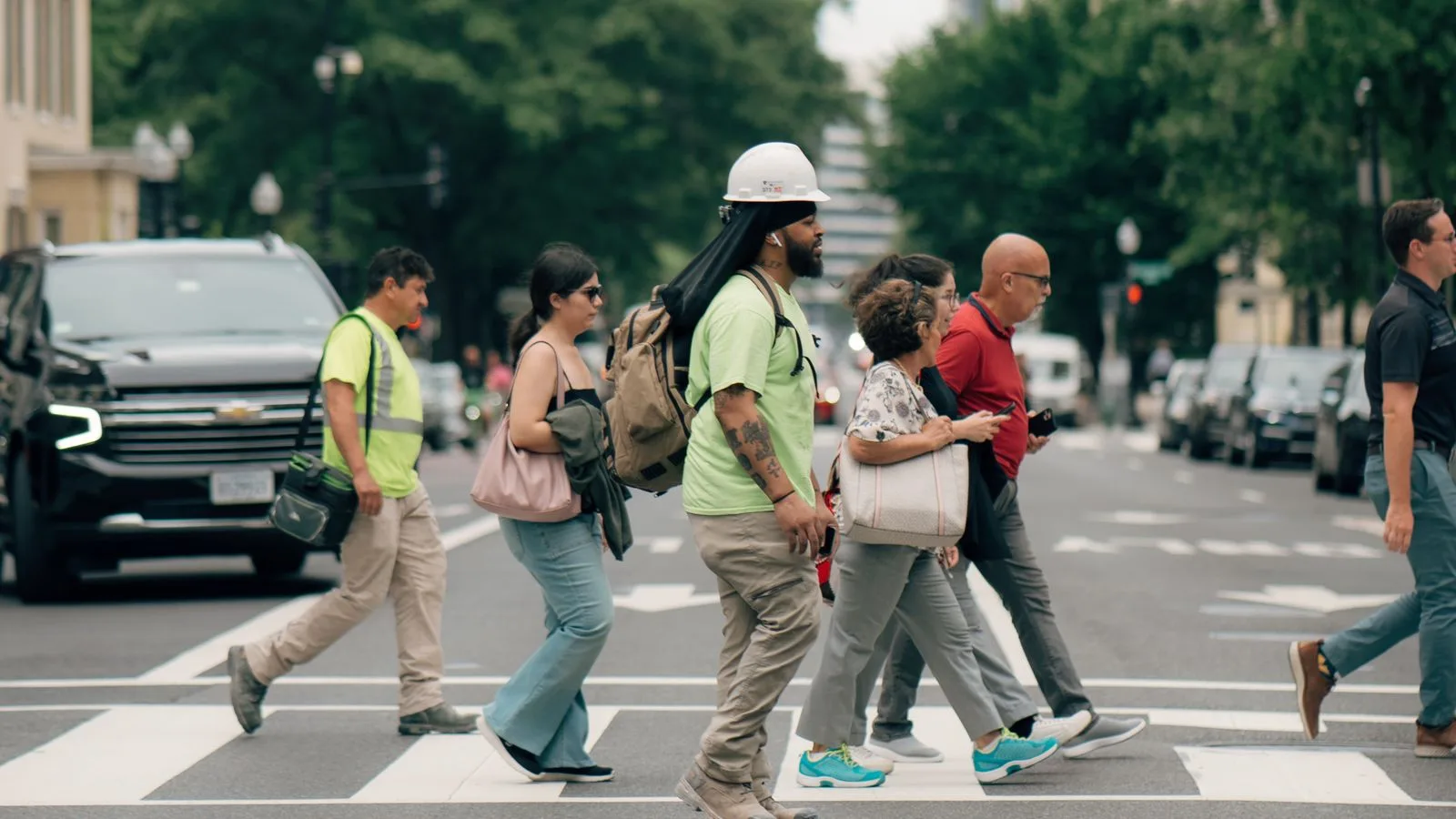
The frequent fact pattern is a person crossing with a walk signal in a marked crosswalk who is struck by a left-turning vehicle whose driver was watching for a gap in oncoming traffic and never saw them. Texas law gives pedestrians the right-of-way in that situation, but the driver's insurer will still test comparative fault: were they crossing against the signal, outside the crosswalk, or distracted. Under proportionate responsibility the claimant's recovery is reduced by their share and barred entirely past 51 percent, so the right-of-way proof matters. City of Austin signal-timing records can establish the walk phase, and downtown traffic-camera and business footage can show the sequence, but that footage is routinely overwritten within 14 to 30 days, so it has to be requested fast.
Severe injuries and the witnesses Austin events leave behind
A pedestrian or cyclist struck by a vehicle has no protection, so even a moderate-speed impact downtown can mean fractures, head injury, or internal trauma that lands the client at Dell Seton's Level I trauma center. The fast ER discharge often understates that — a non-displaced fracture missed on the initial X-ray, a head injury whose symptoms build over days — which is why prompt orthopedic and physical-medicine follow-up is part of building the file. Austin's density cuts the other way too, in the client's favor: event crowds, downtown security, rideshare drivers, and businesses with exterior cameras mean liability witnesses are often unusually plentiful after an evening or event-night collision. Capturing names from the EMS narrative and pulling that footage early can lock liability before it evaporates.





Frequently asked
Austin pedestrian accident questions
- You likely had the right-of-way, which is strong, but liability is rarely automatic. The driver's insurer will probe whether you were in the marked crosswalk, crossing on the signal, and attentive. Texas reduces recovery by your share of fault and bars it past 51 percent, so we lock in the proof — City of Austin signal-timing records and intersection footage — to establish the walk phase before that evidence cycles out.
- Quickly. Downtown traffic-camera, business, and rideshare footage in Austin is commonly overwritten within roughly two to four weeks. After an evening or event-night incident there are often many cameras and witnesses, but that advantage is temporary. The sooner counsel sends preservation requests and identifies witnesses named in the EMS report, the better the chance of capturing the sequence while it still exists.
- Not necessarily, but follow-up care matters. Austin ERs run high acuity and discharge fast, and injuries like non-displaced fractures or developing head-injury symptoms are frequently missed on the first visit. The insurer will anchor to that thin discharge. Getting prompt orthopedic and physical-medicine follow-up creates the record that shows the true injury, which is what the demand is built on.
- Under Tex. Transp. Code § 551.101, a cyclist has the rights and duties of a motor vehicle driver. That means a driver who fails to yield, passes unsafely, or opens a door into a cyclist's path is violating the same traffic rules as if they struck another car. The same comparative-fault rules apply: your recovery is reduced by your share of fault and eliminated if you are found 51 percent or more responsible. Local Austin ordinances requiring buffer distances when passing cyclists can also be evidence of negligence.
- Event conditions can help your case in one important way: there are usually more witnesses and cameras than on an ordinary night. Event security, crowd cameras, rideshare apps with GPS records, and businesses set up for high traffic all produce evidence. The tradeoff is that that evidence is temporary: footage is still overwritten on the same schedule, and the window to preserve it does not expand because it was a festival weekend. Early action matters even more when the incident occurred in an event zone.
- Tex. Transp. Code § 552.005 allows pedestrians to cross outside a crosswalk in certain circumstances, and Texas comparative-fault law does not bar recovery simply because you were jaywalking; your recovery is reduced by your share of responsibility and only barred if you reach 51 percent. The inquiry is whether the driver still had a duty of care and whether a reasonable driver should have seen and avoided you. Drivers are generally required to exercise due care to avoid striking any pedestrian regardless of where they are crossing.
Where we work from
Downtown Austin. Austin clients welcome.
Our office is in downtown Austin; we represent Austin-area clients statewide and travel to Austin for case-specific needs (scene visits, medical-records consultations, court appearances). Home and hospital visits when injuries make travel difficult.
Talk to a Austin pedestrian accident lawyer.
Free case review, no obligation. We'll tell you straight whether we can help.