
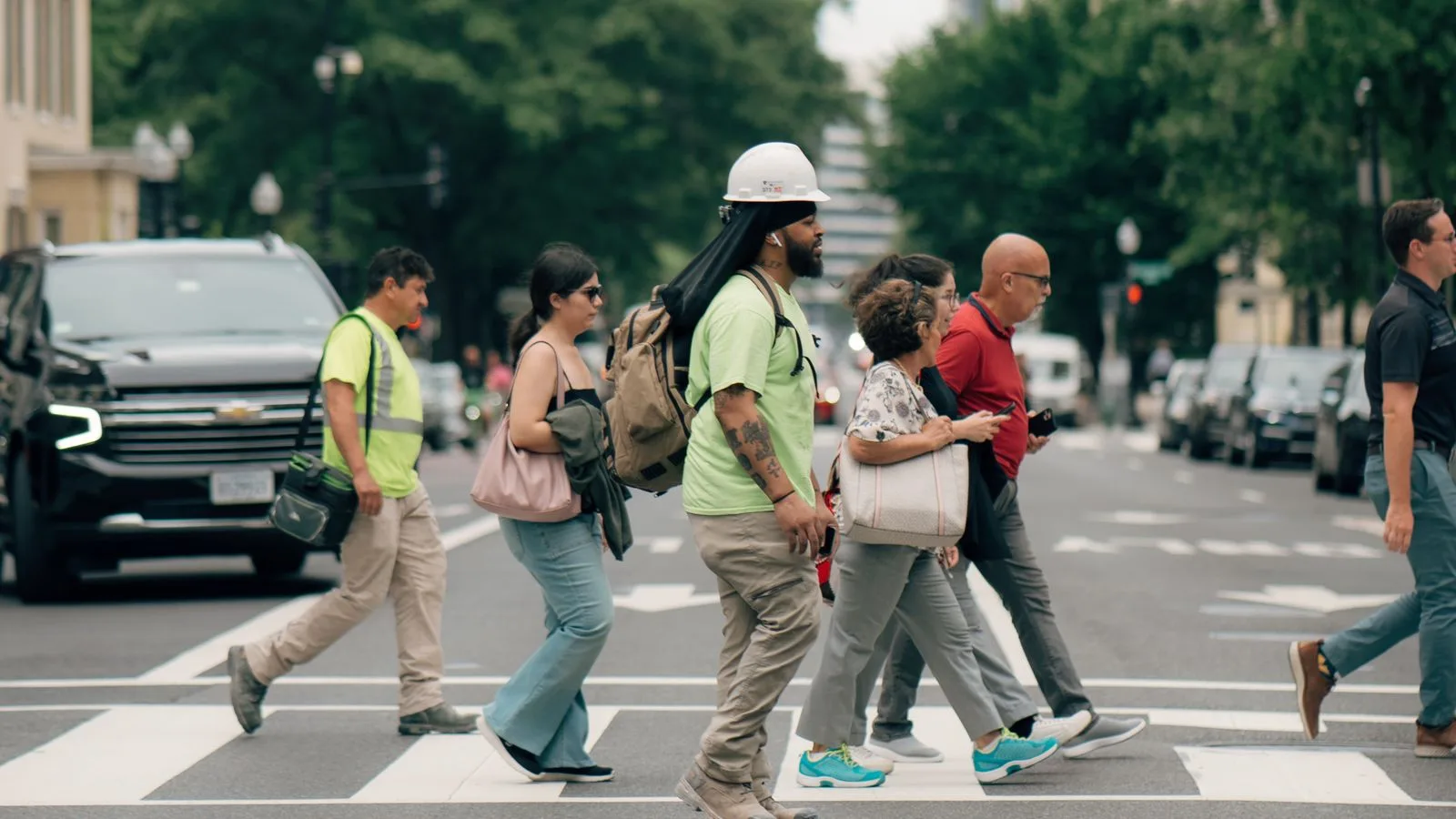
Fort Worth · Pedestrian Accident
Fort Worth Pedestrian Accident Lawyer
A pedestrian or bicycle accident case in Tarrant County is built on the driver's duty to yield and keep a proper lookout under Tex. Transp. Code Chapter 552 for pedestrians and Section 551.101 for cyclists, who carry the same rights on the road as motor-vehicle drivers. Fort Worth's mixed-use corridors — Camp Bowie slip lanes, the West 7th entertainment district, and the Cultural District near Will Rogers Memorial Center — place unprotected road users alongside drivers who are focused on parking and event exits rather than people in crosswalks. The two-year statute under Section 16.003 applies, but surveillance footage and signal-timing data from the City of Fort Worth disappear within weeks. JPS is the Level I trauma center that handles the most serious pedestrian and cyclist admissions in Tarrant County, and the full JPS chart rather than the discharge summary drives the medical value of the claim.
Why Fort Worth cases are different
Fort Worth concentrates pedestrian and cyclist risk where crowds gather, from Sundance Square and TCU football weekends downtown to the Cultural District during Stock Show season at Will Rogers Memorial Center. We represent injured pedestrians, cyclists, and their families across Tarrant County statewide from our Austin office.
Fort Worth intersections and event-driven foot traffic
Pedestrian and bicycle injuries in Fort Worth concentrate where people and vehicles compete for the same space. Sundance Square event traffic and TCU home football weekends pack the downtown and Berry Street surface streets with pedestrians while drivers hunt for parking and exits. Stock Show season at Will Rogers Memorial Center in January and February produces a predictable surface-street congestion spike around the Cultural District. The Camp Bowie slip-lane intersections, designed to keep cars moving, create the exact geometry where a turning driver fails to yield to someone in a crosswalk. A person on foot or a bicycle has no protection against a vehicle, so even a low-speed failure to yield produces serious injury. Establishing right-of-way and the driver's duty at the moment of impact is the heart of these claims, and the surveillance and signal data that prove it run on short retention windows.
Right-of-way, driver inattention, and severe injuries
Texas law gives pedestrians the right-of-way in marked crosswalks and at many intersections, and a driver owes a duty to keep a proper lookout regardless of where a person is crossing. Defense insurers routinely argue the pedestrian darted out or crossed against the signal, invoking Chapter 33 comparative fault to shrink recovery, so the City of Fort Worth signal-timing log, the TxDOT camera feed, and any local surveillance footage matter immediately, especially because footage near downtown and the Cultural District rarely survives beyond two to four weeks. Pedestrian and cyclist impacts often produce orthopedic and head injuries that the ER discharge summary understates, so we pull the full chart, including the imaging read and any trauma consult at JPS, the Level I trauma center that absorbs most serious pedestrian admissions in Tarrant County. The operative note buried in the complete record routinely changes the value of the demand.
More in Fort Worth
Other ways we help Fort Worth injury victims.


Frequently asked
Fort Worth pedestrian accident questions
- Texas gives pedestrians the right-of-way in marked crosswalks, and a driver owes a duty to keep a proper lookout. The insurer may still argue you crossed against the signal under Chapter 33 comparative fault. The City of Fort Worth signal-timing log and any downtown surveillance footage, which runs on a short retention window, help establish that the driver failed to yield. Acting quickly to preserve that evidence is critical.
- Event congestion shifts the evidence picture. Heavy surface-street traffic around Will Rogers Memorial Center means more witnesses and more camera coverage, but that footage is often preserved on short retention schedules. A driver's duty to yield does not relax in a crowd. Early counsel helps lock down the signal data, witness identities, and any nearby surveillance before it cycles out.
- Yes. Pedestrian and bicycle impacts frequently produce head and orthopedic injuries that an ER discharge summary understates. We pull the complete chart, including the imaging read and any trauma consult at JPS, rather than relying on the discharge note, because the full record often reveals injuries that reframe the claim. Delaying treatment or evaluation can also give the insurer an opening to dispute causation.
- Yes. Under Tex. Transp. Code Section 545.418, opening a door into the path of a moving vehicle is a traffic violation, and it applies when the vehicle in the path is a bicycle. A cyclist in the Berry Street corridor has the same road rights as a motor-vehicle driver under Section 551.101. The driver or passenger who opened the door bears liability, and their auto policy is the first coverage to look at.
- Two years from the date of the injury under Tex. Civ. Prac. & Rem. Code Section 16.003. If a government vehicle — a City of Fort Worth vehicle, a Tarrant County vehicle, or a Trinity Metro bus — struck you, the Texas Tort Claims Act requires pre-suit notice within six months, and some entities require even shorter notice. Missing that notice deadline can bar an otherwise valid claim.
- Possibly. Tex. Transp. Code Section 552.005 allows a pedestrian to cross outside a crosswalk but assigns that pedestrian a duty to yield the right-of-way to vehicles. Under Chapter 33 modified comparative fault, you can still recover as long as your share of fault is fifty percent or less. The key questions are where exactly the strike occurred, what the driver could see, and whether the driver was keeping a proper lookout, which is why the physical evidence and any witnesses matter immediately.
Where we work from
Downtown Austin. Fort Worth clients welcome.
Our office is in downtown Austin; we represent Fort Worth-area clients statewide and travel to Fort Worth for case-specific needs (scene visits, medical-records consultations, court appearances). Home and hospital visits when injuries make travel difficult.
Talk to a Fort Worth pedestrian accident lawyer.
Free case review, no obligation. We'll tell you straight whether we can help.