
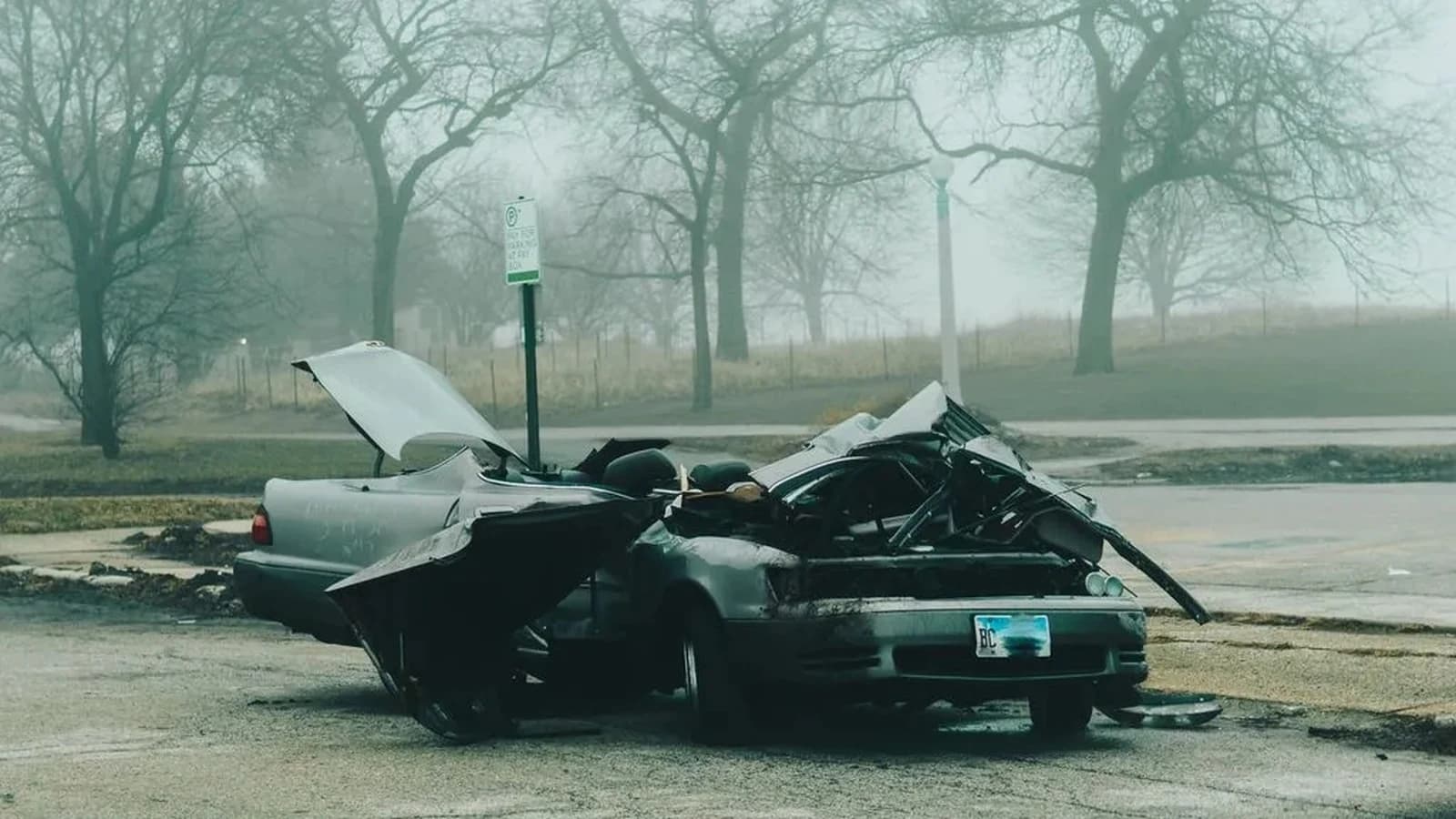
Car accidents · Subcategory
Multi-Vehicle Pileup Lawyer in Texas
A multi-vehicle pileup is a crash sequence involving three or more vehicles, typically triggered by an initial impact that other drivers cannot avoid. The classic Texas pileup happens in dense fog along the Gulf Coast, in winter ice events on the Hill Country highways, or in sudden-congestion stack-ups on I-35 north of Austin and I-45 between Houston and Dallas. These cases are unique in personal-injury practice because liability is rarely binary: fault is allocated across multiple drivers under Tex. Civ. Prac. & Rem. Code Chapter 33, and the analysis can take months to sort out.
How fog, ice, and sudden-congestion chains actually form
Pileups have a physics signature. A first impact stops or rotates a vehicle in a travel lane. A following driver cannot stop in time and adds to the pile. Each subsequent driver has less reaction time and less visibility because the wreckage itself blocks sightlines, and the chain extends until traffic slows enough to react. Weather pileups on I-10 near Sealy or US-290 near Brenham regularly involve twenty or more vehicles. Sudden-congestion pileups on I-35 around Round Rock and Pflugerville typically run three to eight vehicles. The investigation has to map the impact sequence in time and space — which driver hit which vehicle and in what order — because Chapter 33 fault allocation depends on it.
Joint-and-several liability and the 50% threshold under § 33.013
Texas's proportionate-responsibility statute (Tex. Civ. Prac. & Rem. Code § 33.013) preserves joint-and-several liability against any defendant assigned more than 50% of the responsibility. In a pileup, that math matters. If three drivers are each found 33% responsible, none of them is jointly and severally liable to the plaintiff, and the plaintiff collects from each defendant separately up to their assigned share. If one driver is found 60% responsible, that driver can be made to pay the full judgment and pursue contribution from the others. The fault-allocation strategy at trial or in mediation is therefore not just about minimizing the claimant's percentage; it is about pushing the right defendant over the 50% threshold for collection purposes.
The evidence-preservation race
Pileups create more evidence than any other crash type and more pressure to lose it. Every involved vehicle has its own EDR data, often its own dashcam, sometimes a fleet telematics record if it is commercial. Witness statements scatter across multiple police reports because responding agencies often divide a large scene into 'crash report' sectors that don't share information cleanly. We send preservation letters within days to every identified defendant carrier, every commercial fleet, and every known witness, and we file early TRO-style preservation requests when vehicles are about to be released for salvage or repair. Once a vehicle is repaired or scrapped, the EDR and physical-damage record are gone.
Coverage stacking when multiple at-fault drivers are involved
Pileup cases often offer something most car-accident cases don't: multiple at-fault drivers each carrying their own primary auto policy. Even if each individual carrier's exposure is limited, the aggregate available coverage is often substantial. We map every defendant's coverage early — primary, umbrella, household resident, commercial — and we evaluate the order of approach to settlement. Settling with one defendant before the fault picture is clear can prejudice the remaining defendants under Chapter 33's credit and apportionment rules, so the sequence of settlement offers matters as much as the values.


Frequently asked
Questions Texas accident victims ask us
- Through reconstruction and the impact sequence. Texas allocates fault among all responsible parties under Tex. Civ. Prac. & Rem. Code Chapter 33, and the jury (or the carriers in settlement) decide each percentage based on the evidence. Position in the chain matters but is not determinative; being the third or fourth car in a pileup does not automatically assign you fault if the driver behind you initiated the chain or if you were already struck from behind when you hit the car in front.
- It is a rule that lets a plaintiff collect the full judgment from any defendant who is sufficiently responsible, with that defendant left to pursue contribution from the others. Under Tex. Civ. Prac. & Rem. Code § 33.013, joint-and-several liability in Texas applies only to a defendant found more than 50% responsible (with limited exceptions). In a pileup, that threshold can be the difference between collecting a full judgment from one solvent defendant or chasing partial payments from several.
- Through a combination of EDR (event data recorder) downloads from as many vehicles as possible, dashcam footage, witness statements, physical-damage analysis, and skid/scuff/debris mapping at the scene. Modern EDRs record pre-impact speed, brake application, and steering input across a several-second window before each impact event. When two or three vehicles' EDRs are available, the impact sequence can usually be reconstructed with confidence.
- Yes, and it happens often. A first impact pushes your vehicle into the lane ahead; a second vehicle then strikes you from behind or from the side. Each impact is a separate negligent act by a separate driver, and each driver's policy is potentially on the hook for the injuries attributable to their impact. Allocating injury to specific impacts is sometimes medically straightforward and sometimes requires expert testimony.
- Yes. Texas drivers are required to drive at a speed that is reasonable and prudent for conditions under Tex. Transp. Code § 545.351. The posted limit is not a guarantee; when visibility drops, the legally required speed drops with it. Drivers who fail to reduce speed in fog or ice are negligent even if they were under the posted limit. We have litigated several fog-pileup cases where the dispositive evidence was a defendant's EDR showing 65 mph in conditions where 30 mph would have been the reasonable limit.
- The commercial truck typically becomes the highest-coverage defendant in the case, and the case profile shifts. Federal FMCSA rules require commercial carriers to maintain substantial minimum coverage, and the trucking company's vicarious liability for its driver under respondeat superior puts the company's commercial policy in play. The investigation also expands to include driver logs, hours-of-service compliance, dispatch records, and post-crash drug testing.
- Yes, but the sequence matters. Settlements with one defendant generate credits under § 33.012 that reduce the remaining recovery, and an early settlement before the fault percentages are clear can leave money on the table. We typically wait to settle with smaller-coverage defendants until the fault picture is mature, unless an early settlement with a high-policy-limit defendant is strategically valuable.
- Longer than single-defendant cases. Fault allocation alone often takes six to twelve months to develop through reconstruction, EDR analysis, and witness work. Add medical maturation for serious injuries, multiple carrier negotiations, and the procedural complexity of joining multiple defendants in a single lawsuit, and a pileup case routinely runs eighteen to thirty months. Cases that go to trial because the defendants cannot agree on their internal fault split take longer still.
Let's talk about your case.
Free case review, no obligation. We'll tell you straight whether we can help.