
Motorcycle accidents · Subcategory
Left-Turn Motorcycle Crashes
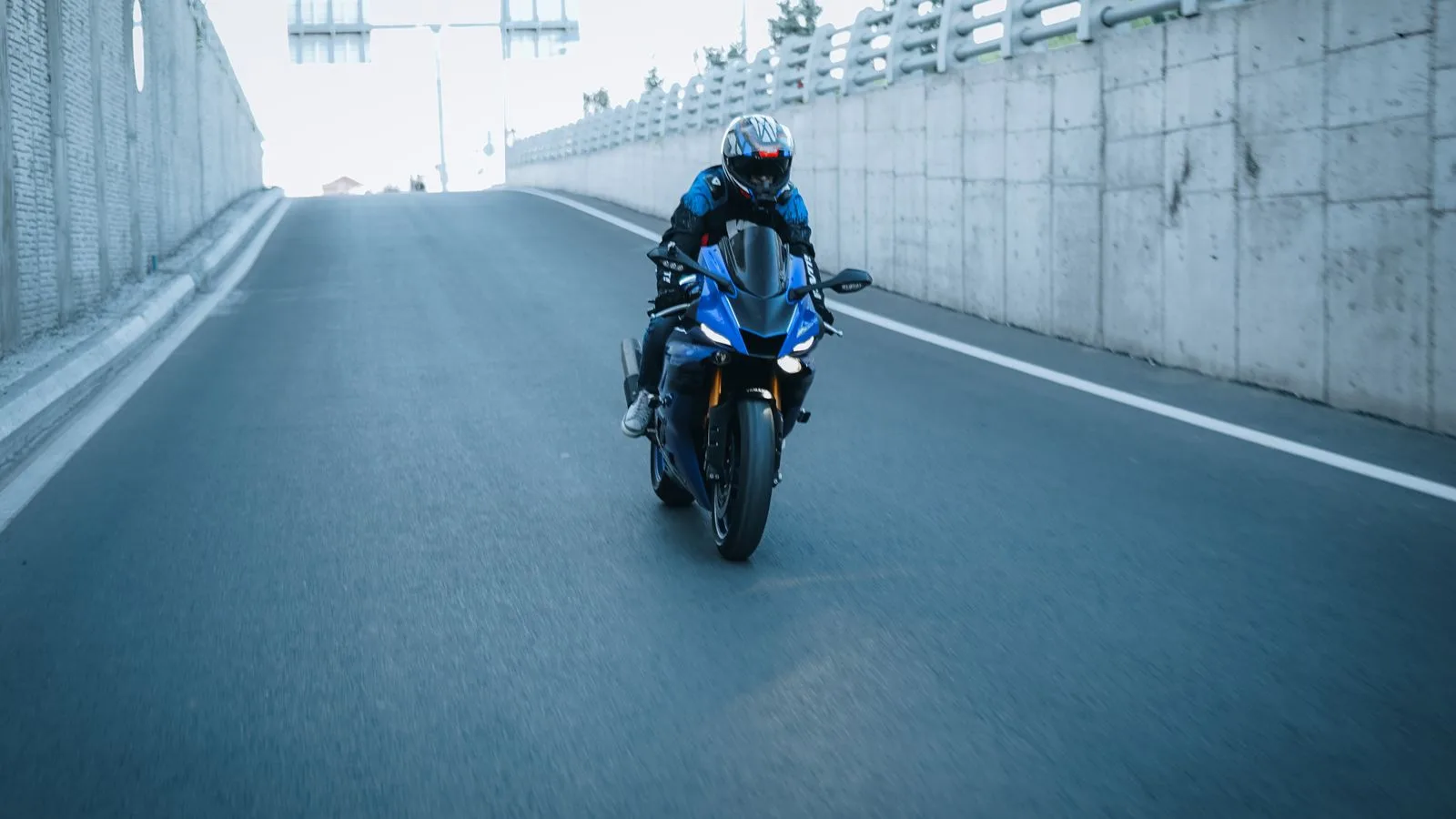
A left-turn motorcycle crash happens when a driver waiting to turn left across oncoming traffic turns into the path of an approaching motorcyclist who has the right-of-way. Tex. Transp. Code § 545.152 imposes on the turning driver a duty to yield to vehicles approaching from the opposite direction so closely as to constitute an immediate hazard. The statute, combined with the predictability of the fact pattern, makes left-turn crashes among the most liability-clean motorcycle cases in Texas, and consistently among the most severe.
The gap-judgment failure that drives most of these crashes
Drivers at a left-turn position make a series of perceptual judgments: distance to the approaching vehicle, closing speed, time available to clear the turn. Motorcycles defeat all three. The smaller frontal silhouette of a bike causes drivers to underestimate distance and overestimate time. The same drivers who would never pull out in front of a sedan routinely do exactly that to a motorcycle. The 'I never saw the bike' line in the CR-3 report is shorthand for a misjudged gap, not a literal failure of vision. We build the file around that distinction, because it converts a sympathy story for the driver into evidence of a § 545.152 violation.
Liability under § 545.152 and how the defense pushes back
When a driver violates the duty to yield while turning left, Texas treats the violation as evidence of negligence per se if the violation proximately caused the crash. The defense almost always tries to move the analysis off the statute and onto the rider's speed: argue the rider was traveling above the limit, argue the rider could have avoided the crash with proper braking, argue the rider was lane-splitting or filtering. The first argument is answered with reconstruction and EDR data where available; the second with rider-perception/reaction-time evidence and the math of the closing distance; the third with the actual lane position at impact. The statutory duty itself is rarely a winnable point for the defense.
Evidence preservation in the first two weeks
Intersection-camera footage from City of Austin Transportation Department signal cabinets typically overwrites in 14 to 30 days. Private business cameras at the corners of busy intersections often overwrite in 14 days. Witness contact information collected at the scene is the difference between a contested liability case and a clean one. We send preservation letters within the first week of intake: to the city, to TxDOT for state-system intersections, and to any private property owner whose camera could have captured the turn. We also document the rider's bike at the storage yard before it is repaired or scrapped, because damage geometry tells the reconstruction story.
Injury severity in left-turn impacts
Geometry matters. A left-turn collision typically loads the rider's body into the side of the turning vehicle, then ejects the rider over the hood or into the windshield, then drops the rider to the pavement at speed. The injury profile is correspondingly layered: lower-extremity fractures from initial impact, thoracic and shoulder injuries from the vehicle-body strike, head injury from the windshield contact, and a road-strike component on the ground. Cases routinely involve multiple surgical procedures, prolonged inpatient stays at Dell Seton or St. David's, and lasting impairment. The medical chronology cannot be rushed if the file is going to support the categories of damages the injuries actually create.



Frequently asked
Questions Texas accident victims ask us
- Tex. Transp. Code § 545.152 requires a driver intending to turn left at an intersection or into an alley, private road, or driveway to yield the right-of-way to oncoming vehicles approaching so closely as to constitute an immediate hazard. The statute applies whether the oncoming vehicle is a car, a truck, or a motorcycle. When a left-turning driver pulls into the path of a rider who had the right-of-way, the statutory violation is the core liability theory in the case.
- It's the most common defense in left-turn motorcycle cases, and it usually overstates the math. Even if the rider was traveling slightly above the posted limit, the driver still had a duty to yield to an immediate hazard, and a driver who misjudged the gap by the seconds it takes a motorcycle to cover the closing distance cannot recover that error by pointing at the rider's speedometer. Reconstruction analysis using skid marks, scene measurements, and (where available) the bike's electronic data can usually contain the speed issue to a comparative-fault percentage well below the 51% bar.
- The phrase shows up in roughly half of left-turn motorcycle CR-3 reports. It reflects a real perceptual phenomenon: the smaller visual footprint of a motorcycle causes drivers to misjudge distance and closing speed, and in some cases to literally not perceive the bike against background traffic. But the statement is not a defense; under Texas law, drivers are required to maintain a proper lookout for all road users, and 'I didn't see' is itself evidence the lookout duty was breached.
- Intersection-camera footage where available (city signal cabinets, private business cameras), independent witness statements collected promptly, scene photography of the final rest positions and any debris field, the bike's damage pattern (which tells the impact angle), and — in any case where the driver disputes the rider's speed — an accident reconstruction. Most of this evidence has a preservation window measured in weeks, not months.
- They try. The argument runs into perception/reaction-time science: a typical rider perception/reaction time is in the 1.0 to 1.5 second range, and at urban speeds the closing distance during that interval often exceeds the entire gap the turning driver took. We retain reconstruction experts to do the math when the defense pushes this argument, and the math usually shows the rider had no real avoidance window.
- Then liability flips. A protected left turn under a green arrow places the right-of-way with the turning driver, and a motorcyclist running a red on the opposing through-movement bears the primary fault for any collision. Signal-timing data from the Austin Transportation Department or TxDOT, combined with intersection-camera footage, resolves these cases quickly one way or the other. We pull both early to avoid building a file in the wrong direction.
- The geometry produces a layered injury pattern: lower-extremity fractures (femur, tibia, ankle) from the rider's body striking the side of the turning vehicle, shoulder and clavicle fractures from going over the hood, head and facial trauma from windshield contact, and a ground-strike component that adds road rash, secondary head injury, and wrist or upper-extremity fractures from the instinctive bracing motion. Pelvic ring injuries are common when the rider strikes the vehicle high on the door.
Let's talk about your case.
Free case review, no obligation. We'll tell you straight whether we can help.