
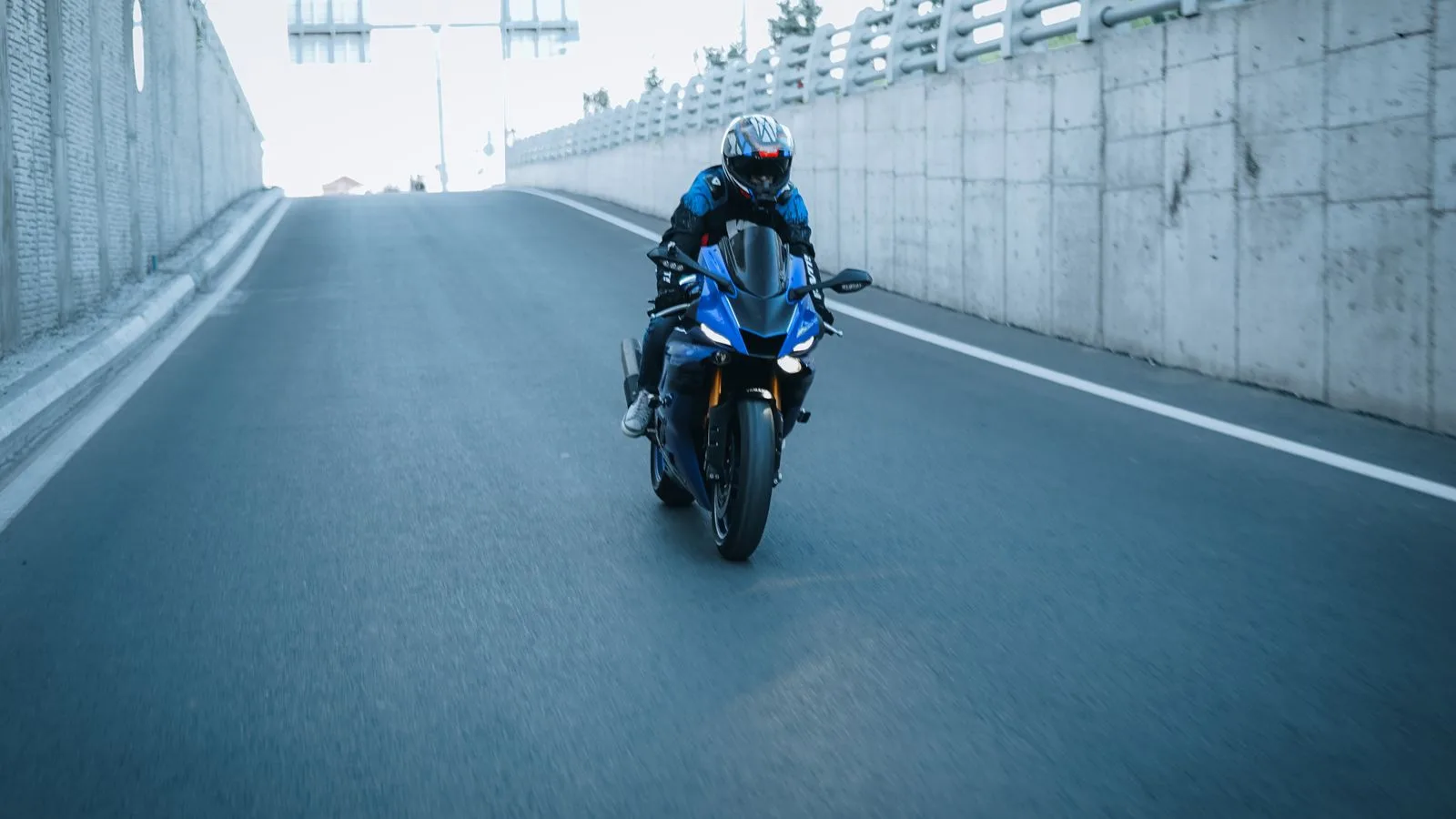
Arlington · Motorcycle Accident
Arlington Motorcycle Accident Lawyer
A motorcycle accident claim in Arlington arises when a driver fails to see or yield to a rider on roads like SH-360, Division Street, or Collins Street, producing a collision where the rider, unprotected by a surrounding vehicle, absorbs the full force of impact. Texas treats motorcycle riders as full participants in the fault analysis under modified comparative negligence, and defense insurers routinely leverage jury skepticism toward riders to push their share of blame toward the fifty-one percent bar where recovery disappears entirely. Injuries tend to be severe — fractures, road rash, and traumatic brain injury — and the medical picture often develops over weeks, making early settlement offers almost always inadequate. Tarrant County district court at the Tom Vandergriff Civil Courts Building is the venue for suits arising from Arlington crashes, within the two-year period under Tex. Civ. Prac. & Rem. Code § 16.003.
Why Arlington cases are different
Riders moving through Arlington's I-30, I-20, and SH-360 triangle face heavy event-day congestion and drivers scanning for stadium exits rather than motorcycles. We represent injured riders and their families statewide, fighting the bias that follows these cases from the crash scene through trial.
Left-turn and lane-change crashes on Arlington roads
The most common way riders get hurt in Arlington is the same way they get hurt across Texas: a driver fails to see the motorcycle and turns or changes lanes into its path. The risk spikes in the entertainment district, where SH-360, Division Street, Collins Street, and Randol Mill carry drivers who are unfamiliar with the area, watching for stadium signage, and changing lanes abruptly to reach parking. On event weekends the surface streets run at freeway-level density, so a single missed glance at an intersection or a lane line becomes a serious impact. Unlike a car occupant, a rider has no crumple zone, so even a low-speed left-turn collision can fracture limbs or cause a head injury. The crash report and any nearby stadium-corridor or business surveillance can establish that the driver, not the rider, created the danger.
Confronting rider bias in fault and damages
Insurers and juries often arrive with an unspoken assumption that a motorcyclist was speeding, lane-splitting, or otherwise reckless, and the defense leans on that bias to shift blame under Texas comparative-fault rules. Because your recovery shrinks with any fault assigned to you and disappears past the fifty-percent line, countering that narrative is central to the case. We document the rider's lawful lane position, lighting, gear, and speed, and pair it with the physical evidence and witness accounts that often scatter quickly after an event-district crash. Motorcycle injuries also tend to be severe, road rash, fractures, and traumatic brain injury, which means future-care needs must be valued accurately rather than discounted with the early lowball offer riders frequently receive. Framing the human story alongside the engineering of the crash is how rider bias gets neutralized.
More in Arlington
Other ways we help Arlington injury victims.


Frequently asked
Arlington motorcycle accident questions
- Defense insurers reflexively blame riders, especially in congested stadium-area traffic. We counter with the physical evidence, scene measurements, the crash report, and any business or corridor surveillance to show your actual speed and lane position. Because Texas comparative fault reduces or bars recovery based on your share, neutralizing that assumption with real evidence directly protects what you can recover.
- Texas law does not authorize lane-splitting, and a driver may try to claim you were doing it to shift blame. Even where you were riding lawfully, the accusation gets raised, so documenting your lane position and the driver's left turn or lane change is important. Whether and how this affects your claim depends on the facts the evidence actually supports.
- Early lowball offers are common in motorcycle cases because insurers expect riders to be undervalued and hope to settle before the full injury picture forms. Severe injuries like fractures and brain trauma often require follow-up imaging and longer treatment to assess. We hold off on valuation until future-care needs are clear rather than accepting an offer keyed to an initial ER visit.
- Riders twenty-one and older may ride without a helmet if they carry the required medical coverage or completed an approved safety course. Helmet status is not admissible to reduce damages for non-head injuries. For head injuries, the defense may argue the helmet's absence contributed, but that requires a causation showing; the mere fact of not wearing one does not automatically cut your recovery.
- Witnesses appear in the crash report if an officer took names, and corridor or business surveillance often captures adjacent pedestrians or bystanders. We review the police report supplement and request any camera coverage from businesses on the block and from the stadium-district operations within the first week. Witnesses who are not captured early are often gone permanently, which is why speed matters.
- The driver's status as an event-area visitor is relevant context, not a legal defense. It helps explain inattention to local traffic patterns and unfamiliarity with the roads near Collins and Division, but liability still depends on the driver's failure to yield. The event-day context may also mean more camera coverage from the venue and stadium-district parking operators than a typical city intersection.
Where we work from
Downtown Austin. Arlington clients welcome.
Our office is in downtown Austin; we represent Arlington-area clients statewide and travel to Arlington for case-specific needs (scene visits, medical-records consultations, court appearances). Home and hospital visits when injuries make travel difficult.
Talk to a Arlington motorcycle accident lawyer.
Free case review, no obligation. We'll tell you straight whether we can help.